Tinnitus Frequency Test: Find Your Pitch
Identifying your tinnitus frequency can help you choose more effective sound therapy profiles. This guide explains what tinnitus frequency means, how matching works, and what to expect from professional audiometric testing.
Tinnitus frequency refers to the perceived pitch of the sound you hear—whether it is a high-pitched ring, a mid-range hum, or a low rumble. Most tinnitus falls between 2,000 Hz and 8,000 Hz, with the majority of people reporting sounds in the higher frequency ranges. Knowing your approximate tinnitus frequency is useful because it allows you to select sound therapy profiles that are tuned closer to your specific pitch, which research suggests may be more effective than generic broadband noise.
Frequency matching is a process where you compare your tinnitus to external tones at different pitches to find the closest match. Clinical audiologists perform this using calibrated equipment during a tinnitus evaluation, and the results are more reliable than self-assessment. However, getting an approximate sense of your frequency at home can be a helpful starting point for choosing between sound therapy options like white noise, pink noise, or notch-filtered sounds.
Some tinnitus management apps include tone generators that let you sweep through frequencies and identify where your tinnitus seems to match. While these tools can be informative, they have limitations: your tinnitus pitch may fluctuate throughout the day, background noise affects perception, and without calibrated headphones the results are approximate at best. Treat app-based frequency matching as a useful starting point, not a clinical diagnosis.
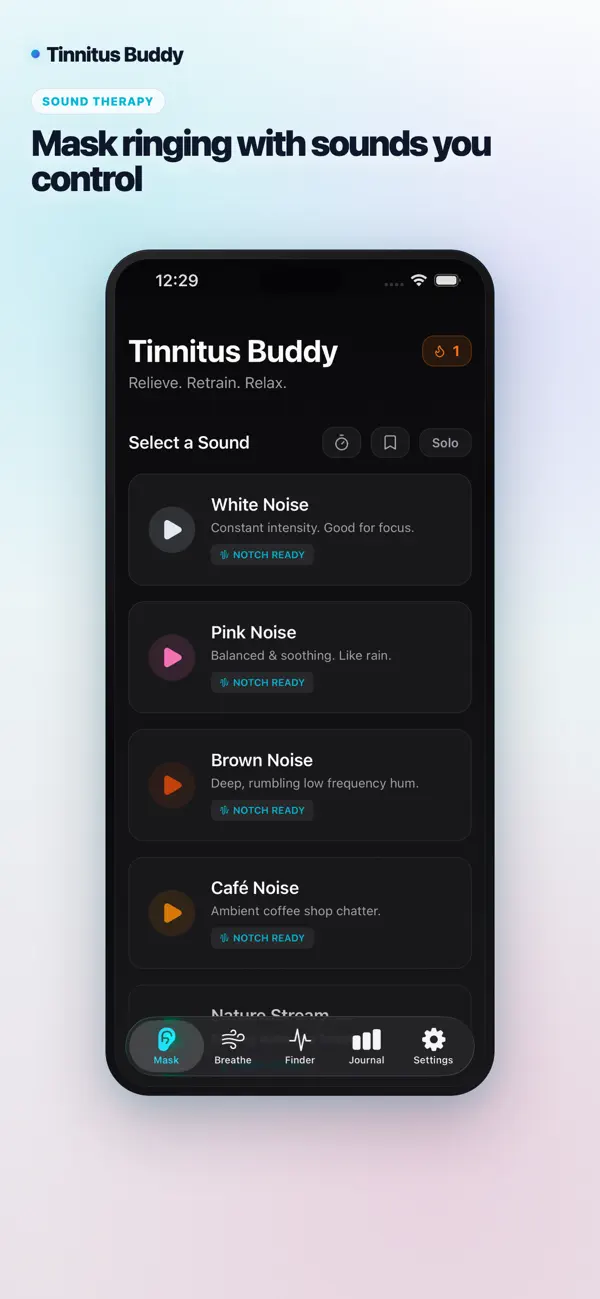
The practical value of knowing your tinnitus frequency lies in sound therapy customization. Notch therapy, for example, works by filtering out the specific frequency of your tinnitus from enriching sounds, which some research suggests may help the brain reduce its amplification of that frequency over time. Even without notch therapy, knowing whether your tinnitus is high-pitched or low-pitched helps you choose between sound profiles—high-frequency tinnitus often responds well to nature sounds with similar spectral content, while lower-pitched tinnitus may respond better to rain or brown noise.
If you want a reliable tinnitus frequency assessment, schedule an appointment with an audiologist who specializes in tinnitus. They can perform pitch matching, loudness matching, and minimum masking level tests that give you precise data. This information is especially valuable if you are considering hearing aids with tinnitus sound generators, as the devices can be programmed to your specific frequency profile.
When this is useful
- You want to choose sound therapy profiles matched to your tinnitus pitch.
- You are curious whether your tinnitus is high or low frequency.
When this may not help
- You need a medical diagnosis of hearing loss or tinnitus cause.
- Your tinnitus pitch changes dramatically throughout the day.
What you can do now
- Use a tone generator to sweep frequencies and note where your tinnitus seems loudest.
- Try different sound therapy profiles (white, pink, brown noise) and track which provides the most relief.
- Schedule an audiologist appointment for professional tinnitus pitch matching if results matter for your treatment plan.
TinnitusBuddy features used
Frequently asked questions
What frequency is tinnitus usually?
Most tinnitus is perceived between 2,000 Hz and 8,000 Hz, though it varies widely. Some people experience lower-pitched humming or buzzing.
Can I test my tinnitus frequency at home?
You can get an approximate idea using tone generator apps, but professional audiometric testing with calibrated equipment is more reliable.
Why does tinnitus frequency matter for sound therapy?
Knowing your frequency helps you select sound profiles that blend better with your tinnitus and may make notch therapy or targeted masking more effective.
Is a tinnitus frequency test the same as a hearing test?
No. A hearing test measures what you can hear at various frequencies. A tinnitus pitch match identifies the frequency of the sound you perceive internally. Both are done by audiologists.
Medical disclaimer
This page is educational and does not provide medical diagnosis or treatment. Seek qualified medical care for urgent or worsening symptoms.