Long-form guide · Made for iPhone
Tinnitus relief for ringing earsCalm the ringing, reclaim the quiet
A practical, long-form guide to tinnitus relief for ringing ears—sound therapy, masking, daily tracking, sleep and stress tools, and when to see a doctor. Use the free TinnitusBuddy iPhone app alongside it.
- Free to download
- No account required
- Private by design
Last reviewed April 2026
What does “tinnitus relief for ringing ears” actually look like?
If you are searching for tinnitus relief for ringing ears, you are probably tired of a sound only you can hear. The honest answer is this: for most people, tinnitus is managed rather than cured. The good news is that management works. With a small daily routine—sound therapy, masking, tracking, and stress care—the ringing becomes quieter in your attention, even when the signal itself doesn't change.
This guide walks through what the ringing is, the most common causes, the evidence-informed relief strategies you can start today, a simple daily routine, and the red flags that mean you should see a clinician. It is written by the team behind TinnitusBuddy, a free iPhone app for sound therapy, masking, and tinnitus tracking.
Quick answer
Layer gentle background sound so your brain stops straining against the quiet, track what makes it louder (sleep, caffeine, stress, noise exposure), and build two short daily anchors—a morning listen and an evening masker. See a clinician if the ringing is new, one-sided, pulsing, or paired with dizziness or sudden hearing loss.
Why do ears ring in the first place?
Tinnitus is the perception of sound—ringing, buzzing, hissing, or crickets—without a matching sound in the environment. It is usually a sign that the hearing pathway and the brain's auditory centers have become a bit more attentive to internal activity, often after noise exposure, a change in hearing, or a stressful period.
The sound itself lives in the brain's hearing system, not the ear drum. That is why pure silence often feels louder: without other sound to listen to, the brain turns up the gain. Relief strategies work by giving the brain something else to anchor onto and by lowering the threat-response that keeps tinnitus at the front of your attention.
This is why the same amount of ringing can feel mild on a calm, well-rested day and unbearable after a bad night of sleep. The signal did not change—the brain's volume knob did.
What makes ears ring?
Tinnitus is usually a symptom, not a disease. Several things can contribute, often at the same time.
Noise exposure
Concerts, power tools, headphones at high volume, and loud workplaces can trigger short-term or longer-term ringing.
Hearing changes
Age-related hearing loss or a drop in certain frequencies often coincides with tinnitus onset.
Stress and sleep
Anxiety, poor sleep, and caffeine sensitivity can amplify how loud and intrusive ringing feels.
Other factors
Earwax impaction, jaw (TMJ) tension, some medications, and ear infections can all contribute. A clinician can rule these out.
If your ringing appeared suddenly, only on one side, pulses with your heartbeat, or comes with dizziness or hearing loss, book an appointment rather than relying on self-management.
Tinnitus relief you can start today
Pick one or two to try first. Consistency over weeks matters far more than intensity on day one.
Sound therapy & masking
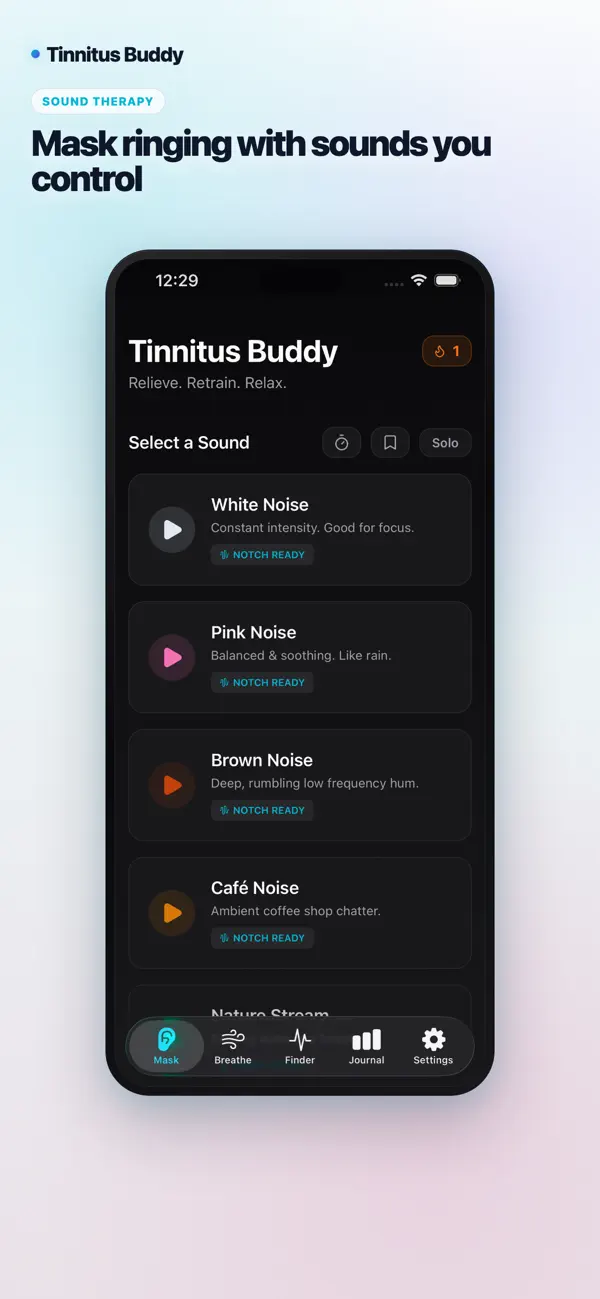
Layer gentle background sound so your brain stops straining to hear the ring. White, pink, and brown noise, plus nature soundscapes, give habituation something to anchor to.
How sound therapy worksTrack triggers daily
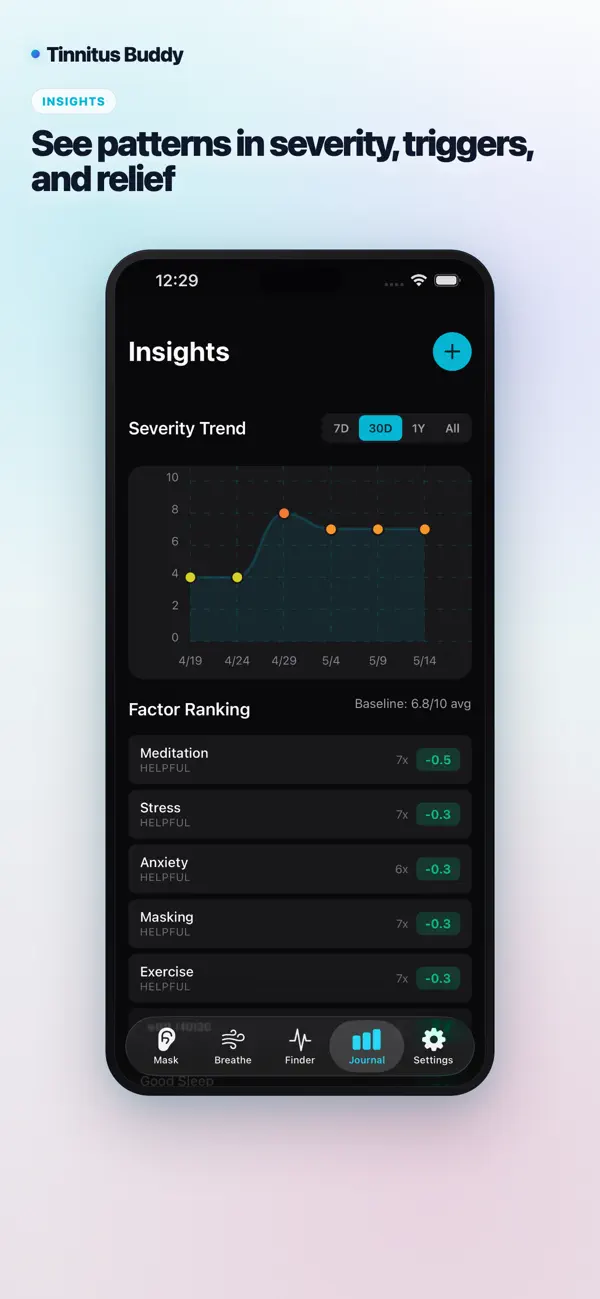
A 30-second daily check-in builds a picture of when your ringing gets louder—caffeine, loud rooms, bad sleep, stress—so you can make small changes that add up.
Start a tinnitus journalCognitive reframing
CBT-style reframing changes the meaning your brain attaches to the sound. Over time, the ringing becomes less threatening and less attention-grabbing.
What is cognitive reframing?Better sleep routines
Consistent wind-downs, cooler rooms, and a low-volume soundscape make falling asleep easier when ringing is loud.
Sleep use casesStress down-regulation
Slow nasal breathing, short walks, and brief body scans reduce the sympathetic response that makes tinnitus feel louder.
Browse stress guidesMorning & evening anchors
Two predictable moments of calm bookend the day: a short listen in the morning, a masking track at night. Consistency is what builds habituation.
See the iPhone app
TinnitusBuddy: ringing-ears relief in your pocket
TinnitusBuddy is a free iPhone app built around the same strategies in this guide. Tune sound therapy to your specific tinnitus frequency, save a preset for sleep and another for focus, log how loud today feels on a 0–10 scale, and watch patterns emerge over weeks.
- White, pink, and brown noise plus natural soundscapes
- Built-in notch therapy tuned to your specific frequency
- Daily 30-second check-in to surface triggers
- On-device data—nothing to sign up for
A simple day of tinnitus relief for ringing ears
Two short anchors bookend your day. The rest is small adjustments that keep arousal lower and your brain less threatened by the sound.
Morning
1–3 minutes of gentle sound therapy while your brain acclimates to quiet. Log your overnight ringing intensity (0–10) and sleep quality.
Workday
Low-level background sound for focus. A short stress break at lunch—slow breathing, jaw release, a brief walk—to keep arousal down.
Wind-down
Reduce bright screens and stimulation. Swap intense audio for a soft soundscape. Run a 2-minute cognitive reframing exercise.
Sleep
Masking track at a volume just below your tinnitus. Sleep timer so it fades. Tomorrow's journal is already waiting in the app.
When to see a doctor about ringing ears
Self-management is a good fit for chronic, stable, both-sided ringing. Book an appointment with a GP or audiologist if any of these apply:
- Ringing is only in one ear, or much louder in one ear
- It pulses in time with your heartbeat (pulsatile tinnitus)
- It started suddenly, especially with any hearing loss or dizziness
- It has not improved after two to four weeks of gentle self-care
- It is paired with ear pain, drainage, a sensation of fullness, or fever
- You experienced a recent head injury, ear infection, or very loud noise event
Ringing ears: the questions we hear most
What helps ringing in the ears go away?
+
For most people, ringing in the ears is managed rather than cured. Evidence-informed options include sound therapy and masking (white, pink, and brown noise), notch therapy targeted at your specific tinnitus frequency, cognitive reframing and CBT techniques, better sleep routines, and reducing stress. A hearing evaluation can also uncover treatable factors such as earwax impaction or hearing loss.
Is there a fast way to get tinnitus relief when it flares up?
+
In the moment, gentle background sound (a fan, a soundscape, or a masker app) helps most people reduce the contrast between their tinnitus and the surrounding quiet. Slow nasal breathing, jaw and neck release, and a short walk can lower the stress response that often amplifies the perception of ringing.
Do sound therapy and masking apps actually work?
+
Sound therapy and masking are widely used clinically to support habituation—the brain's ability to downgrade tinnitus to a non-threatening background signal. A dedicated app like TinnitusBuddy lets you tune the exact frequency, save presets for sleep and focus, and track which sounds help across days.
Will my ears stop ringing on their own?
+
Acute ringing after a loud event often fades within hours to a few days. Ringing that lasts longer than two weeks, worsens, appears in only one ear, pulses with your heartbeat, or comes with dizziness or sudden hearing loss should be evaluated by a clinician.
Is TinnitusBuddy a medical device?
+
No. TinnitusBuddy is a self-management and educational app. It is not a substitute for professional medical evaluation, diagnosis, or treatment. If your symptoms are new, severe, or changing, please see a qualified clinician.
Start your tinnitus relief routine today
Download TinnitusBuddy free on iPhone. Pair sound therapy, masking, and a 30-second daily check-in—and let the ringing fade into the background of your day.
Medical Disclaimer: The information on this page is for educational purposes only and is not medical advice. TinnitusBuddy is not a medical device and is not intended to diagnose, treat, or cure tinnitus. Always consult a qualified healthcare provider for diagnosis and care of tinnitus or any medical condition.