Tinnitus Journaling Prompts
Use these prompts to quickly capture patterns, stress signals, and helpful routines without writing long entries.
Tinnitus journaling prompts provide structure for daily reflection without requiring lengthy writing sessions. Many people want to track their symptoms and patterns but struggle with blank-page journaling, unsure of what to write or how to organize their thoughts. Structured prompts solve this problem by guiding your attention to the most useful information: symptom intensity, environmental factors, emotional responses, and what strategies are helping or not helping.
Effective journaling prompts focus on actionable insights rather than venting or repetitive complaints. Instead of asking "How do you feel about your tinnitus today?"—which might lead to circular negative thoughts—better prompts include "What was your tinnitus intensity this morning on a scale of 1-10?" and "What one action today seemed to help reduce disruption?" These focused questions generate data that you can compare across days and weeks, revealing patterns that inform your self-management decisions.
A practical set of tinnitus journaling prompts might include three to five questions that you answer at the same time each day. For example: "Rate tinnitus intensity (1-10)," "Rate stress level (low/medium/high)," "How many hours of sleep last night?" "What sound profile did you use today?" and "One helpful action I took." This takes only a few minutes but creates a rich dataset over time. The consistency of asking the same questions daily is what makes the data meaningful—you can spot trends and correlations that would be invisible without structured tracking.
The best prompts are specific enough to generate comparable data but flexible enough to capture your unique situation. If you notice that certain factors seem relevant to your tinnitus—such as caffeine intake, exercise, or specific work environments—add prompts about those variables. If other prompts are not providing useful information, remove them to keep your journaling lightweight and sustainable. The goal is to gather insights, not to create a burdensome daily task that you will eventually abandon.
Reviewing your journal entries weekly or bi-weekly transforms raw data into actionable insights. Look for patterns: Do certain days consistently show higher tinnitus intensity? What factors correlate with better days? Which self-management actions appear most frequently in your "helpful action" responses? This analysis helps you identify what is working and what might need adjustment. Some people find it helpful to create simple charts or graphs of their ratings over time, as visual representations can reveal trends that are hard to spot in written entries.
When this is useful
- You want a faster journaling format.
- You want better data from your daily reflections.
When this may not help
- You need immediate professional care for severe psychological distress.
What you can do now
- Use 3-5 prompts at the same time daily.
- Log one helpful action and one difficult moment each day.
- Review weekly to identify recurring patterns.
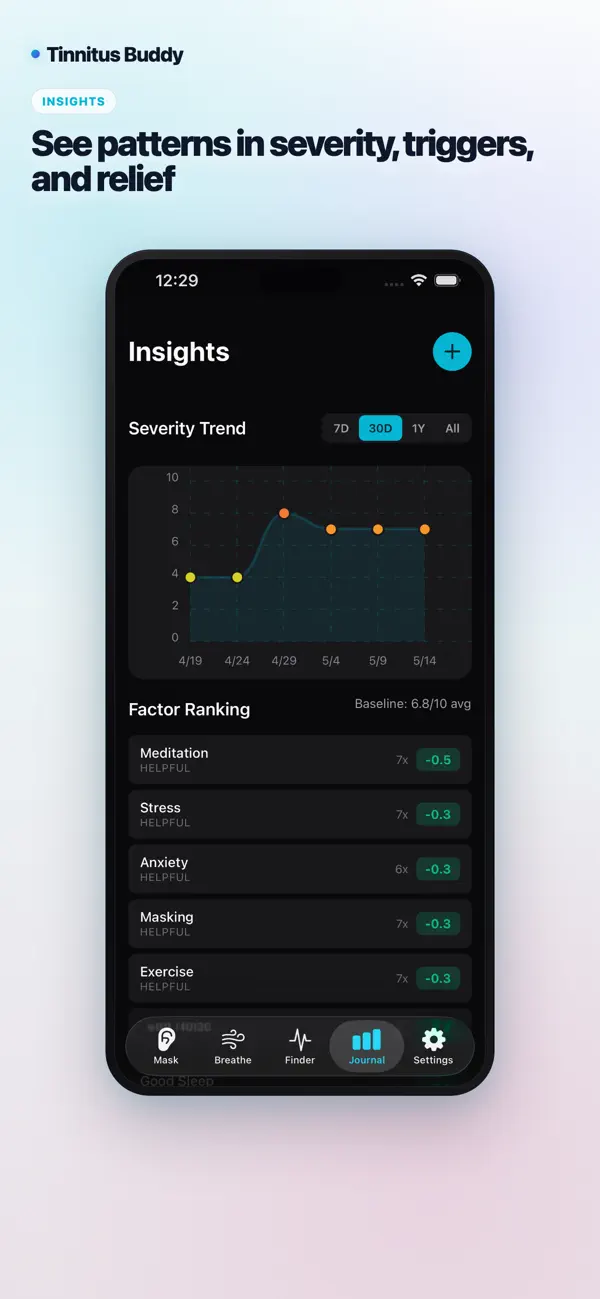
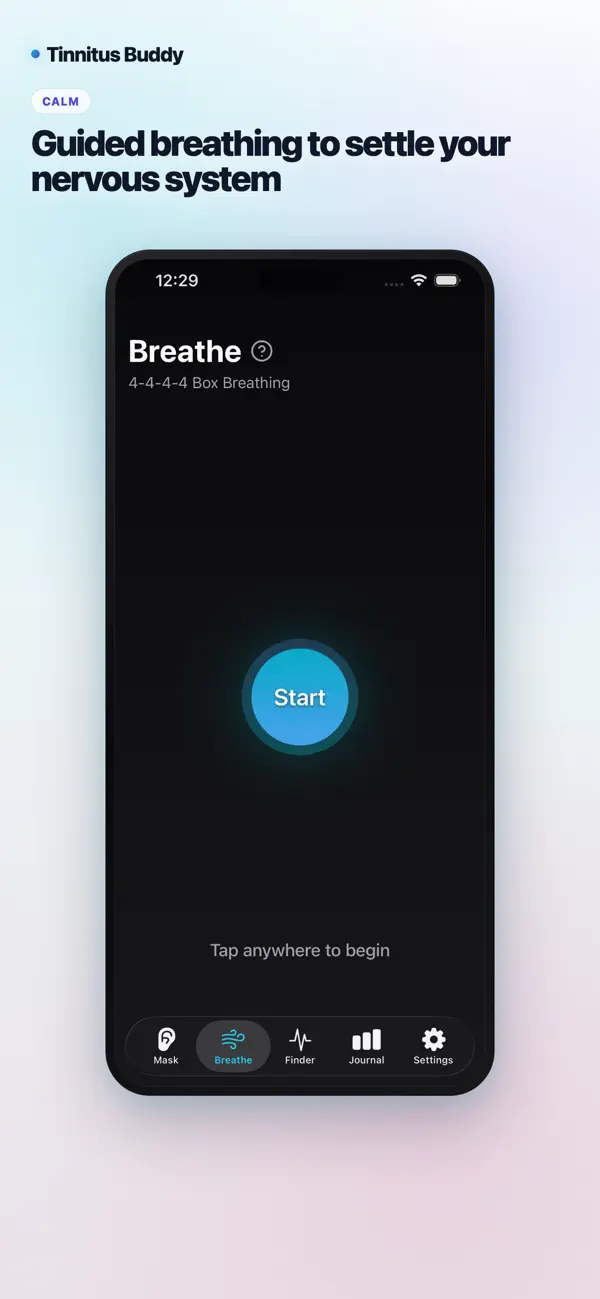
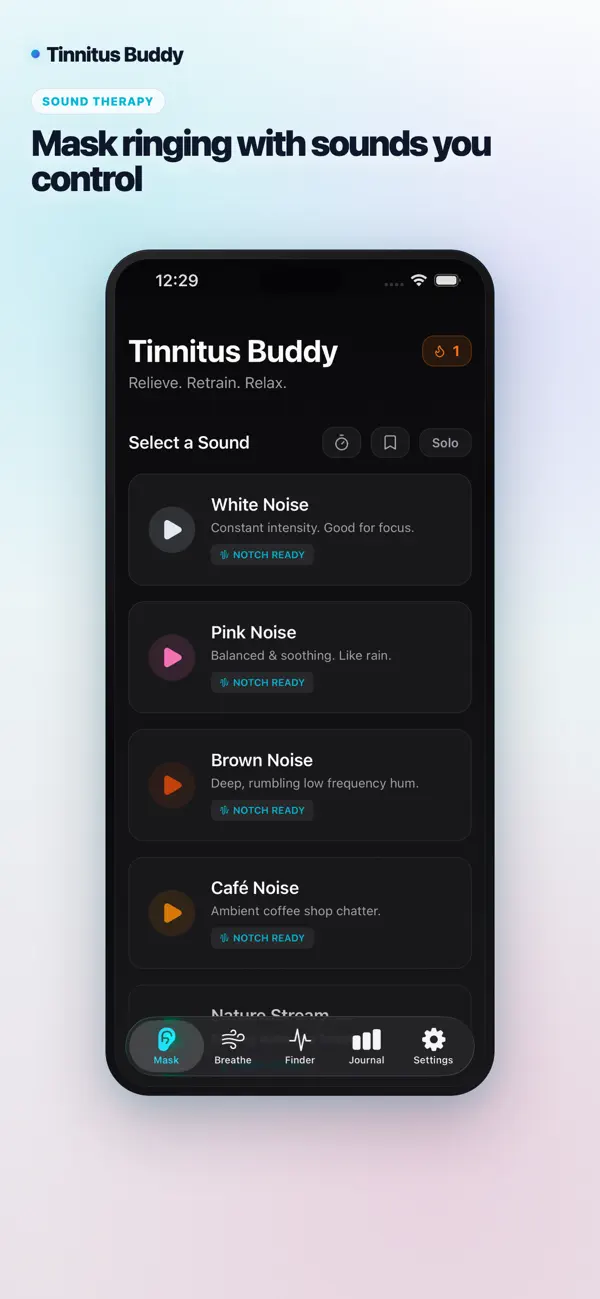
TinnitusBuddy features used
Frequently asked questions
Do I need long entries for journaling to help?
No. Short, consistent entries are often easier to sustain and compare.
Can prompts replace medical advice?
No. Prompts support self-observation and do not provide diagnosis or treatment.
Which prompts matter most?
Start with prompts tied to your main goals: symptom intensity, sleep, stress, and one helpful action per day.
Medical disclaimer
This page is educational and does not provide medical diagnosis or treatment. Seek qualified medical care for urgent or worsening symptoms.