Back to Blog

Tinnitus Sound Therapy: A Guide to Managing the Ringing

By Tinnitus Buddy

Tinnitus sound therapy isn’t a cure, but it’s one of the most powerful tools we have for managing the internal ringing, buzzing, or hissing that defines the condition. It uses external sounds to change how your brain perceives and reacts to the tinnitus, making it feel less noticeable and disruptive.

How Tinnitus Sound Therapy Changes Your Brain

Think about your tinnitus like a single, relentless cricket chirping in an otherwise silent room. It’s impossible to ignore. But what happens when you open a window and let in the gentle, complex sounds of a rainstorm? The cricket is still there, but it no longer dominates the soundscape. It blends in, losing its power to command your attention.

This is the fundamental principle behind tinnitus sound therapy. It's a cornerstone of modern tinnitus management that can provide relief by making the internal sound less intrusive. It's not about "curing" the sound but about retraining your brain's relationship with it—a crucial distinction, because tinnitus isn't just an ear problem. It's a neurological one.

Here’s a quick overview of what sound therapy aims to accomplish.

The Goals of Tinnitus Sound Therapy

Therapy Goal How It Works Primary Benefit
Reduce Auditory Contrast Adds external sound to "fill the silence," making tinnitus less jarring. Immediate relief and reduced perceived loudness.
Promote Habituation Helps the brain learn to reclassify tinnitus as unimportant background noise. Long-term reduction in tinnitus awareness and distress.
Aid Relaxation Uses calming sounds to activate the body's relaxation response. Breaks the stress-tinnitus cycle, reducing anxiety.
Distract Attention Gives the brain a more interesting, pleasant sound to focus on. Shifts focus away from the internal sound, reducing its intrusiveness.

Ultimately, these goals work together to move tinnitus from the foreground of your awareness to the background, where it belongs.

Reducing Auditory Contrast

One of the most immediate benefits of sound therapy is its ability to reduce the stark contrast between your tinnitus and a quiet environment. When it’s silent, that internal ringing can feel deafening and distressing.

Sound therapy introduces a gentle, soothing audio background that effectively "fills the silence." This makes the tinnitus signal less distinct and alarming, providing instant comfort and dialing down its perceived intensity.

This simple act of adding sound to your surroundings can break the frustrating cycle of focus and annoyance that so many people with tinnitus struggle with, especially when trying to relax or get to sleep.

Promoting Relaxation and Habituation

Tinnitus and stress are notorious for creating a vicious cycle. You stress about the sound, which makes it seem louder, which in turn causes even more stress. Sound therapy is a fantastic way to break this pattern.

Soothing sounds, like gentle rain or a flowing stream, can trigger your body’s natural relaxation response. This doesn’t just feel good; it also helps your brain begin the crucial process of habituation.

Habituation is when your brain learns to reclassify the tinnitus signal from an important, threatening sound to irrelevant background noise. Over time, you begin to tune it out automatically, much like you’d ignore the familiar hum of a refrigerator in your kitchen.

The growing understanding of these brain-based approaches is reflected in the market's expansion. The global tinnitus management market, which includes sound therapy devices and apps, was valued at $3 billion in 2025 and is projected to reach $4.4 billion by 2035. This growth underscores the increasing demand for effective, non-invasive management options. You can explore more about this market trend and its drivers.

A Guide to the Different Types of Sound Therapy

When it comes to sound therapy for tinnitus, there’s no single “best” approach. Instead, think of it as a spectrum of different tools, each designed for a specific job. Understanding the four main methods—masking, habituation, neuromodulation, and customized sounds—is the first step toward finding what works for you.

They all use sound, of course, but their goals are worlds apart. Some are about getting quick relief by covering up the noise, while others are playing the long game, training your brain to simply ignore the sound over time. Let’s break down each one.

Sound Masking for Instant Relief

Masking is the most direct and intuitive form of sound therapy. The idea is simple: you introduce a neutral or pleasant external sound that’s just loud enough to partially or completely cover up your tinnitus. It’s the same reason you might turn on a fan to drown out a dripping faucet.

  • How it works: By giving your brain another sound to focus on, you make the tinnitus less noticeable. The external sound competes for your brain’s attention, pushing the ringing or buzzing into the background.
  • Common sounds: White noise, pink noise, nature sounds like rain or ocean waves, or even a simple desk fan can all work as effective maskers.
  • Best for: Getting immediate, temporary relief. It’s especially helpful in quiet places where tinnitus often feels the loudest, like when you’re trying to focus or fall asleep.

Masking offers fast comfort, but it’s important to know that it doesn’t change your brain's deep-seated reaction to the tinnitus. Once you turn the masking sound off, the tinnitus is usually right back where it was.

Habituation: Retraining Your Brain's Attention

Habituation-based approaches, like the well-known Tinnitus Retraining Therapy (TRT), take the opposite tack. The goal isn't to hide the tinnitus but to teach your brain to filter it out naturally. Think of it like moving into a new home near a busy road. At first, the traffic is all you hear. But after a while, your brain learns the noise isn't a threat and simply stops paying attention to it.

TRT typically pairs directive counseling with a low-level, broad-band sound. The key is that the sound is set below the volume of your tinnitus, creating a "mixing point" where you can hear both. This gently encourages your brain to reclassify the tinnitus as just another piece of unimportant background noise, gradually stripping away its emotional power and conscious grip.

The real goal of habituation isn't to make the sound disappear, but to make your reaction to it disappear. Over weeks and months, the tinnitus can shift from an alarming intruder to an irrelevant hum you barely notice.

Neuromodulation to “Reset” Brain Activity

Neuromodulation is a more high-tech approach that uses specially engineered sounds to disrupt the faulty brain patterns that are believed to cause tinnitus in the first place. Instead of just masking the sound or ignoring it, this method actively tries to interfere with the hyperactive neurons in your brain’s auditory centers.

Imagine your tinnitus is like a group of neurons stuck firing in a repetitive, synchronized loop. Neuromodulation introduces a new, complex sound pattern to break up that unwanted rhythm. The aim is to "reset" this neural activity, which can lead to a lasting reduction in how loud the tinnitus seems, even after you stop listening. This is a long-term strategy that requires consistent daily listening to see results.

All these therapies ultimately work toward a few shared goals: reducing the stark contrast of the tinnitus, promoting a state of calm, and helping the brain learn to filter out the noise.

Flowchart illustrating sound therapy goals: main goal (brain) leading to reduce contrast, promote relaxation, and filter noise.

This flowchart shows how retraining the brain is the central goal, supported by reducing the sonic contrast between silence and tinnitus, fostering relaxation, and improving the brain’s own filtering system.

Customized and Notched Sounds

Finally, we have notched sound therapy, a highly personalized technique that’s gaining a lot of traction. This process starts by identifying the specific frequency of your tinnitus. That exact frequency is then digitally "notched out" of broadband noise or music.

When you listen to this notched audio, the neurons responsible for generating your tinnitus sound aren't stimulated, while the neurons all around them are. This is thought to trigger a neurological process called lateral inhibition, which can help quiet down those overactive tinnitus-producing neurons. This approach shows particular promise for people with tonal tinnitus, where the sound is a single, clear frequency.

The interest in these personalized solutions is booming. The market for tinnitus tools, valued at $915.936 million in 2021, soared to $1,289.6 million by 2025. You can read more on the Tinnitus Rehabilitation Instrument market research to see just how fast this area is growing.

Comparing Sound Therapy Approaches

With all these different methods, it can be tough to know where to start. This table breaks down the core differences to help you see which approach might be the best fit for your situation.

Therapy Type Primary Goal Example Sound Best For
Masking Immediate, temporary relief White noise, rain, fan Quick relief in quiet settings (sleep, focus)
Habituation (TRT) Long-term brain retraining Low-level broadband noise Reducing emotional distress and intrusiveness over time
Neuromodulation "Resetting" neural activity Specially engineered tones Lasting reduction in tinnitus volume with consistent use
Customized/Notched Targeted neural inhibition Music with a frequency "notch" People with tonal tinnitus who know their frequency

Each of these therapies offers a different path toward relief. Masking is your go-to for quick comfort, while habituation and neuromodulation are commitments to retraining your brain for more durable, long-term change. Understanding their unique philosophies is the key to choosing a strategy that aligns with your personal goals for managing tinnitus.

The Science Behind Why Sound Therapy Works

How can something as simple as listening to sounds help with something as stubborn as tinnitus? It seems almost too good to be true, but it’s not magic. It’s neuroscience. The power of sound therapy isn’t in the sounds themselves, but in what they get your brain to do.

At its most basic level, sound therapy works by playing with a concept called auditory contrast. Think of your tinnitus as a single, flickering candle in a pitch-black room. In the total darkness, that tiny flame is impossible to ignore—it’s the only thing you can see.

Now, imagine slowly turning up a dimmer switch in that room. The ambient light begins to fill the space. The candle's flame hasn't changed, but it now blends into the background, becoming far less noticeable. That’s exactly what sound therapy does for your hearing. In a quiet room, your tinnitus screams for attention because it's the only "sound." But when you introduce a gentle, external sound—like soft rain or a low hum—you reduce that stark contrast, making the tinnitus feel much less intrusive.

Tapping into Your Brain's Ability to Adapt

But it goes deeper than just covering up the noise. Sound therapy actively engages your brain's incredible capacity to change and rewire itself, a principle known as neuroplasticity. Your brain isn’t a fixed organ; it’s constantly learning and adapting based on what you pay attention to. Habituation-based sound therapies use this to their advantage.

The goal is to teach your brain to reclassify the tinnitus signal. Instead of flagging it as a new, important, or threatening sound, your brain learns to treat it like the familiar hum of a refrigerator—irrelevant background noise that can be safely ignored.

This retraining process isn't instant. It requires consistent exposure to specific therapeutic sounds, often played at a volume just below your tinnitus. This encourages your brain to start filtering out the tinnitus signal on its own. Over time, your conscious awareness of the sound can fade, leading to lasting relief.

And the science backs this up. The momentum behind this research is real—between 2000 and 2021, over 2,933 publications on the topic came out of 74 different countries. This growing body of evidence helps explain why, in clinical studies, a significant number of people report improvement from using sound enrichment. You can delve deeper into the global research trends on sound therapy to see just how solid its foundation is.

Breaking the Stress and Tinnitus Cycle

Finally, we have to talk about the powerful connection between your hearing and your emotions. Your auditory system is directly wired into your limbic system—the part of your brain that handles your emotional responses. This is why stress, anxiety, and frustration almost always make tinnitus feel louder and more intense. When you're stressed, your nervous system goes into "fight-or-flight" mode, making you hyper-aware of any potential threats, including the internal sound of your tinnitus.

This kicks off a nasty feedback loop:

  1. Tinnitus causes stress: The constant sound is intrusive and draining, causing anxiety.
  2. Stress amplifies tinnitus: Your heightened state of alert makes the sound seem louder and more threatening.
  3. The cycle repeats: This loop can quickly make the condition feel completely overwhelming.

This is where calming sounds, like gentle nature scapes or ambient music, can be a game-changer. These sounds directly help engage your parasympathetic nervous system, the "rest and digest" state that counters fight-or-flight. By soothing your emotional state, you get powerful psychological relief on top of the auditory benefits, helping you finally break the cycle and reclaim a sense of control.

Building Your Personal Sound Therapy Routine

Person in bed holding a phone with a rain cloud icon, surrounded by abstract sound waves.

Knowing the different types of sound therapy is a great first step. But the real change begins when you start weaving these sounds into your daily life. Creating a personal routine is all about putting the theory into practice and using specific sounds to navigate the different challenges tinnitus throws at you.

Forget searching for a single "magic" sound. The goal is to build a flexible toolkit of sounds that you can rely on in different situations.

The trick is matching the right sound to the right moment. The audio you need to fall asleep is worlds away from what you’ll need to focus at your desk or calm down during a stressful spike. Let’s break down how to build these purpose-driven soundscapes.

Designing a Soundscape for Better Sleep

For so many of us, nighttime is when tinnitus feels the loudest. The quiet of the bedroom creates a harsh contrast that can make the ringing or buzzing feel totally overwhelming, turning the simple act of falling asleep into a nightly struggle. The goal here is to create a gentle, peaceful sonic blanket.

Continuous, low-volume sounds are your best friend. Think of steady, gentle rain, a flowing river, or even the soft hum of a fan or air conditioner. These sounds are predictable and non-distracting, offering just enough auditory stimulation to keep the silence from making your tinnitus the main event.

A core principle for helping your brain habituate long-term is to set the volume of your sound just below the level of your tinnitus. This is often called the "mixing point." It allows your brain to hear both sounds at once, which gently encourages it to reclassify the tinnitus as unimportant background noise instead of just covering it up.

This simple technique not only helps you drift off to sleep more easily but also supports your brain's natural ability to tune out the internal sound over time.

Enhancing Focus and Productivity at Work

Tinnitus can absolutely shred your concentration, especially in a quiet office or when you're trying to get deep work done at home. For these moments, you need a sound that can mask your tinnitus without becoming a new distraction. This is where broadband noises really shine.

Broadband sounds like white noise or pink noise are fantastic for focus. Because they contain a wide range of frequencies, they are incredibly effective at covering up the specific pitch of your tinnitus.

  • White noise contains equal energy across all sound frequencies, much like the static from an old TV or radio.
  • Pink noise is a bit different, with more energy in the lower frequencies. This creates a deeper, less "hissy" sound, often compared to a steady waterfall or heavy rain.

Experiment with both. See which one feels more comfortable and less intrusive to you. The right sound will just blend into the background, helping your tinnitus fade from your awareness so you can finally get back to your work.

Using Sound to Manage Stressful Moments

Stress is a massive trigger that can dial up the volume on your tinnitus in a heartbeat. When you’re anxious or frustrated, your nervous system goes into high alert, and your brain becomes extra sensitive to the tinnitus signal. Here, the goal is to use sound to actively soothe your mind and body.

This is where nature sounds and ambient music are incredibly powerful. The complex, non-repeating patterns of a forest soundscape or the gentle, flowing chords of ambient music can pull your focus away from the ringing and engage your body’s natural relaxation response. This helps break that vicious cycle where stress worsens tinnitus, and tinnitus, in turn, worsens stress.

For more practical ideas on this, our guide on how to build a daily tinnitus routine is a great resource.

This intentional use of sound isn’t just a distraction; it's a powerful act of self-care. It provides immediate psychological relief while also indirectly lowering how loud your tinnitus feels by calming your entire nervous system down.

You can even become your own sound engineer through a practice called soundscaping. This just means layering different sounds to create a personalized audio environment that you find both enjoyable and effective. For instance, you might combine the sound of a gentle stream with some soft ambient music to create a unique blend that you find both calming and great at masking. The possibilities are endless, and finding your perfect mix is all part of the journey.

Using Modern Apps for Tinnitus Management

A hand taps a smartphone screen displaying a tinnitus sound therapy app with nature sound controls.

Technology has put incredibly powerful tools for tinnitus management right into our pockets. Not so long ago, getting started with sound therapy often meant buying expensive, single-purpose devices. Today, a good mobile app gives you a comprehensive sound library and so much more, making relief more accessible than ever.

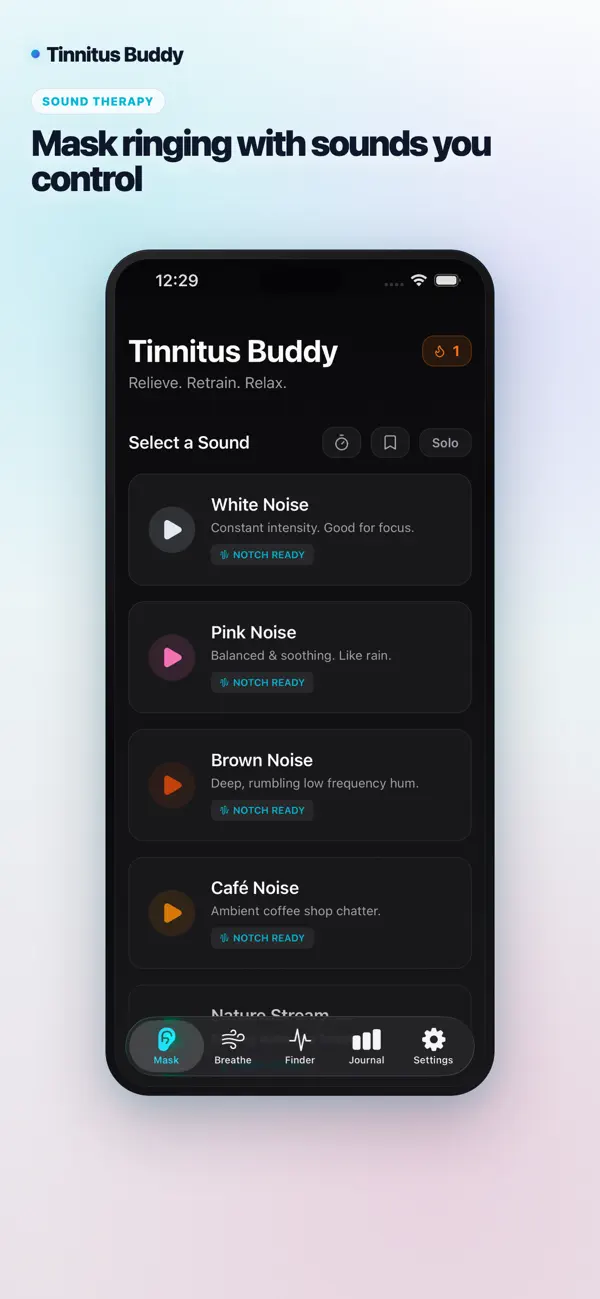
This is a huge shift. It basically makes you your own sound engineer. Apps give you access to vast collections of sounds—from broadband noises like white and pink noise to an incredible variety of nature sounds and ambient tracks. The real magic is that you can mix and layer these sounds to create a personalized soundscape that just feels right and successfully dials down the intrusion of your tinnitus.

Personalization and Smart Matching

One of the biggest breakthroughs with app-based therapy is how precisely you can tailor the sounds. The best apps don't just play a generic rainstorm; they offer tools to help you pinpoint your specific tinnitus frequency. This process, often called pitch matching, lets the app create sounds customized to your unique tinnitus profile.

For instance, once you identify your pitch, an app might generate notched sound therapy. This is where your specific tinnitus frequency is surgically removed from a piece of music or broadband noise. The whole point is to calm those overactive brain cells causing the tinnitus, rather than just drowning it out. This level of fine-tuning used to be reserved for clinical settings, but now it’s right there on your phone.

Another game-changing feature is the ability to tweak the sound's character—its spectral qualities. Instead of a one-size-fits-all sound, you can shape it to match your hearing needs or just your personal preference, making sure it provides relief without becoming a new annoyance.

More Than Just a Sound Player

The most effective tinnitus apps understand that you're managing more than just a sound. You're dealing with an experience that can impact your mood, your focus, and your sleep. They function as holistic support systems.

These apps are designed to be comprehensive management partners. They combine sound therapy with features rooted in Cognitive Behavioral Therapy (CBT) principles, helping you change not just what you hear, but how you react to it.

This integrated approach is all about building resilience and helping you feel back in control.

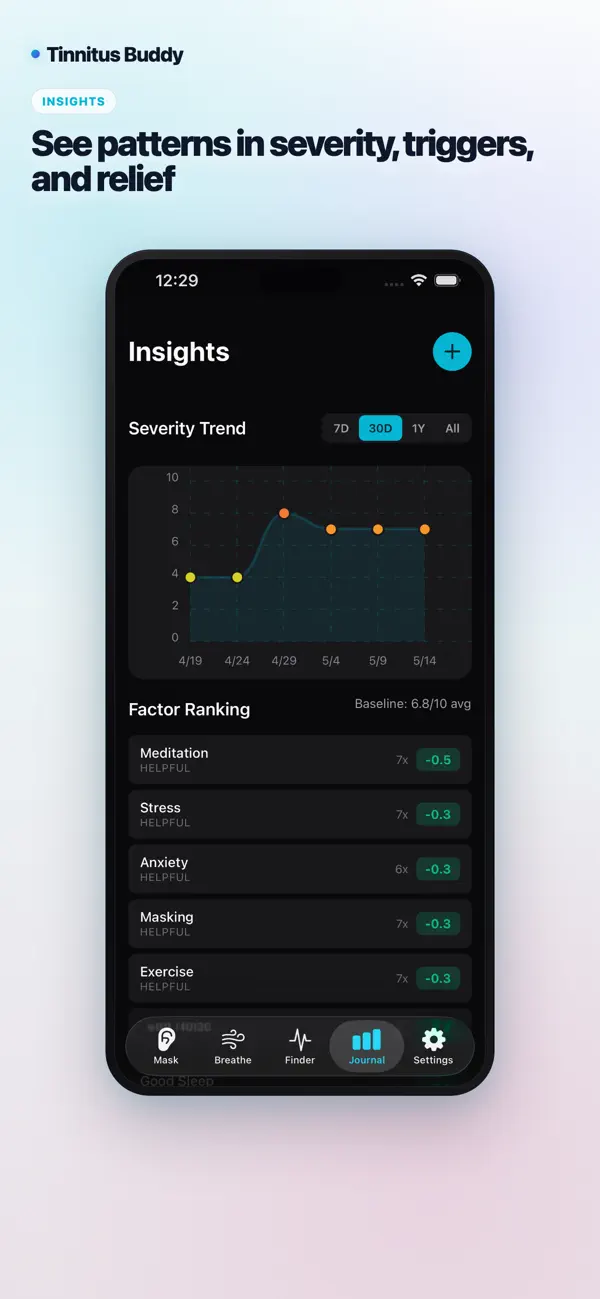
  • Daily Journaling: Many apps include a tracking feature to log your tinnitus intensity, daily stress, sleep quality, and even your diet. Over time, this data helps you connect the dots and spot patterns or triggers you might have completely missed.
  • Educational Content: Understanding what’s happening in your brain is a huge part of managing tinnitus. Good apps provide easy-to-digest articles and guides that demystify concepts like habituation, tinnitus sound therapy, and neuroplasticity.
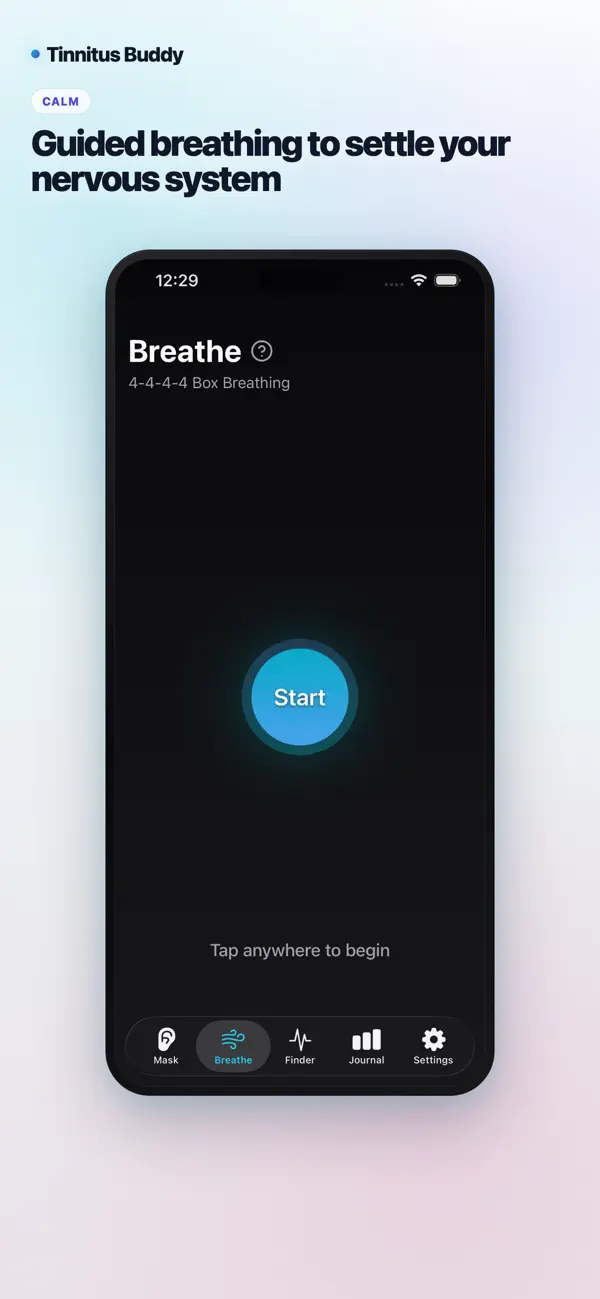
  • Guided Exercises: To help break the vicious stress-tinnitus cycle, many apps include guided breathing exercises, meditations, and other relaxation techniques. These tools are designed to calm your nervous system, which can have a direct and immediate effect on how loud your tinnitus seems.

When you put these pieces together, these apps offer a structured path toward building an effective daily management routine. You can learn more about tinnitus sound therapy apps and see how they can fit into your own journey.

Putting Control Back in Your Hands

Ultimately, what modern apps do is empower you. They give you the tools for self-discovery and self-management. Instead of feeling helpless against the ringing, you can actively experiment with sounds, track what works, and learn coping strategies that are proven to help. Taking this proactive role is the foundation of habituation.

It’s important to remember that these tools are designed to work alongside, not replace, professional medical advice. Think of them as management aids that help you build skills, reframe your reactions to tinnitus, and make smarter daily choices. By using them consistently, you can get a much better handle on your condition and move toward quieter, more predictable days.

Why You Still Need to See a Doctor

While tinnitus sound therapy is a fantastic tool for managing your symptoms day-to-day, it’s absolutely critical to remember that it’s a support system, not a substitute for professional medical advice. Think of sound therapy apps and self-management as powerful allies in your journey. They work best when they're part of a plan you've created with a doctor or audiologist—not instead of one.

Your first and most important move should always be to get a proper medical evaluation. This step is non-negotiable.

When to Seek Immediate Medical Attention

Some symptoms are more than just annoying; they're red flags that signal something else might be going on. It's essential to see a doctor right away to rule out any underlying issues if your tinnitus:

  • Is new or has changed suddenly.
  • Is only in one ear.
  • Pulses in sync with your heartbeat (this is called pulsatile tinnitus).
  • Is joined by dizziness, vertigo, hearing loss, or pain in your ear.

These signs can point to specific medical conditions that require targeted treatment. Trying to self-manage without a clear diagnosis can be risky.

An audiologist is a key player here. They can run a full hearing evaluation to check for hearing loss, which goes hand-in-hand with tinnitus for a huge number of people. They might also suggest other tools, like hearing aids, which often come with built-in sound generators designed specifically for tinnitus relief. You can learn more about when to seek medical care for tinnitus in our guide.

A professional diagnosis is the foundation of a successful tinnitus management plan. It ensures you are addressing the right problem safely and gives you a clear path forward, combining medical guidance with powerful self-management tools.

Ultimately, partnering with a healthcare provider ensures you're not just putting a bandage on a symptom. You're building a complete, personalized strategy for long-term relief and well-being.

A Few Common Questions About Sound Therapy

Dipping your toes into the world of tinnitus sound therapy always brings up a few practical questions. It’s totally normal. Getting clear, straightforward answers is the best way to move forward with confidence and set the right expectations.

Let's tackle some of the most common things people ask when they first start using sound to manage their tinnitus.

How Long Does This Actually Take to Work?

This is probably the number one question, and the answer really depends on what you're trying to achieve.

If you're using sound for masking, the relief is immediate. The second you turn on some white noise or a rain sound, it can instantly make your tinnitus less noticeable. It’s a quick fix for in-the-moment relief.

But if your goal is long-term habituation—teaching your brain to tune out the tinnitus—that's a more gradual journey. Think in terms of weeks or even months of consistent, daily use. You're helping your brain slowly recategorize that internal sound from "important" to "background noise." Patience and consistency are your two best friends here.

Will Sound Therapy Make My Tinnitus Go Away for Good?

It’s so important to frame this correctly: sound therapy is a management tool, not a cure. The main goal isn't to erase the sound completely, but to shrink its perception and impact on your life.

For many people, consistent practice can help them get to a place where their tinnitus is so quiet and un-annoying that they barely notice it. That’s a huge win.

The real objective is to push your tinnitus so far into the background of your awareness that it stops bothering you. Success is when you can go for long stretches of your day without even thinking about it.

What's the Best Sound to Use?

There's no single "best" sound that works for everyone. The most effective sound is the one that works for you.

Some people swear by broadband noises like pink or white noise for powerful masking. Others find the complex, gentle patterns of nature sounds—like a flowing stream or wind through the trees—far more soothing.

The best approach is to experiment. Here are a few common starting points:

  • For Sleep: Steady, low-volume sounds like gentle rain or a fan often do the trick without being disruptive.
  • For Focus: Broadband noises (white/pink noise) are great at covering tinnitus without demanding your attention.
  • For Stress: Calming nature scapes or ambient music can help soothe your nervous system and dial down the tension.

The key is finding a sound that is both pleasant to listen to and effective at turning down the volume on your tinnitus. This is where apps that let you mix and layer sounds really shine—they give you the freedom to cook up a personalized audio recipe for whatever you need at that moment.


Ready to take control and start building your own soundscapes? TinnitusBuddy combines a rich sound library with journaling tools and educational content to support you every step of the way. Explore how our app can help you manage tinnitus day by day.

Prepared with the Outrank tool

About the author

Content from the Tinnitus Buddy team, focused on practical education for managing tinnitus with sound therapy and daily tracking.

Read our editorial policy for how we review health content.

Next steps for tinnitus relief

Medical Disclaimer

The content in this article is for informational purposes only and does not constitute medical advice. TinnitusBuddy and its authors are not healthcare professionals. Always consult with a qualified healthcare provider for diagnosis and treatment of tinnitus or any other medical condition.